Third Practice

Debt & Insolvency

Legal accompaniment through the individual insolvency process, debt management, objections to enforcement, cancellation of attachments and debt arrangements. A return to sound financial life — not through evasion, but through a transparent and complete legal process.

Areas of Practice

Debt & Insolvency

  • Insolvency and economic rehabilitation process (individual)
  • Objection to enforcement of a bill / claim
  • Cancellation of attachments — bank and physical
  • Debt arrangements with creditors
  • Insolvency Law 2018 — representation at every stage
  • Accompaniment throughout the discharge period

Our Methodology

How We Approach a Case

  1. 01

    Initial Consultation

    Opening meeting — hearing the full story, gathering existing documents, initial assessment of the claim and evaluation of prospects. At no cost.

  2. 02

    Case Building & Legal Analysis

    In-depth analysis of the material, gathering expert opinions if required, mapping evidence and testimony. The stage that establishes the case before any legal action.

  3. 03

    Preliminary or Legal Proceedings

    Negotiation, settlement agreement, or full legal proceedings. The choice depends on the strength of the case, the opposing side, and the client's preference.

  4. 04

    Accompaniment to Resolution

    Continuous representation before all committees and instances, ongoing updates, explanation of every decision. Until the case concludes with an outcome.

Questions We Hear

Frequently Asked Questions

When should I approach the insolvency process?

When the level of debt exceeds realistic repayment capacity, or when multiple active creditors are applying pressure. Sometimes a private debt arrangement is preferable; sometimes insolvency opens the solution.

What is the difference between a debt arrangement and an insolvency process?

A debt arrangement — settlement with specific creditors, without changing the general legal status. Insolvency — a court proceeding that halts all creditors simultaneously, establishes a rehabilitation period, and ends with a discharge.

Does insolvency eliminate tax debts?

It depends. Tax debts not yet converted into a court judgment can be discharged; child support debts never can; criminal fines — no; debts to private companies — yes.

Documented Results

Documented results in this practice area

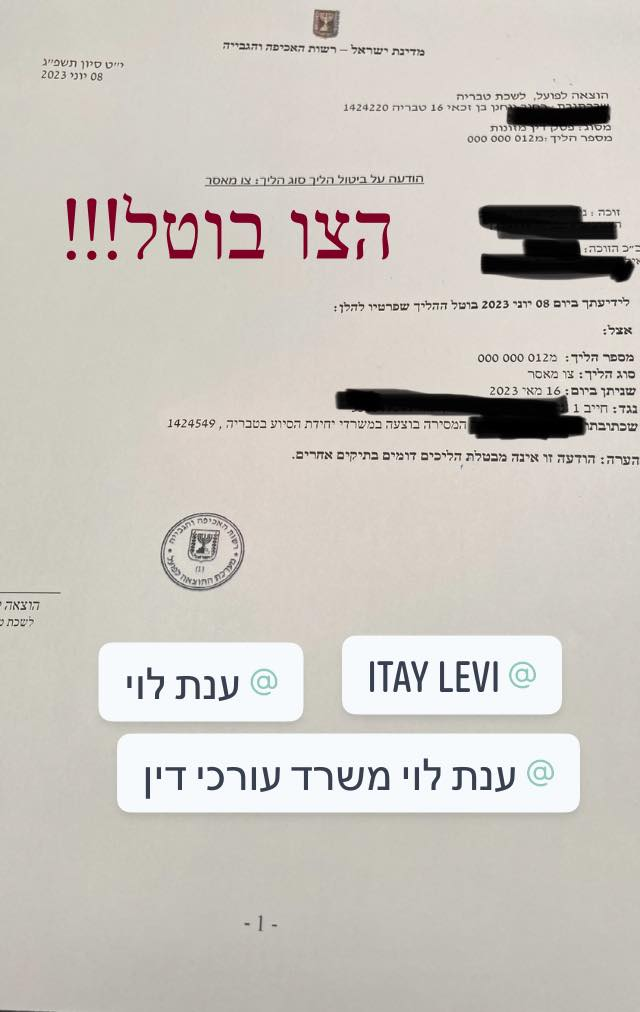
Authentic screenshots of decisions issued by the National Insurance Institute and the labor courts, originally published on the firm’s Facebook page. Personal identifiers are redacted with black rectangles on the source image.

Screenshot of a judicial decision cancelling a civil-imprisonment order in an enforcement proceeding. Debtor details redacted.

W06

Cancellation of a civil-imprisonment order

An enforcement (Hotzaa La-Poal) proceeding in which a civil-imprisonment order had been issued against the debtor. The firm filed a motion to cancel; the order was set aside before execution — the debtor never entered custody.

Outcome

Order cancelled

This outcome is not a guarantee of a similar result in any other case.

Each case is examined according to its own circumstances, documents, deadlines and applicable law. These examples are not a guarantee of a similar outcome in other cases. The firm’s attorneys do not promise a particular result — only the investment of effort to exhaust the legal options available to the client.

View all documented cases

Areas of Practice

Debt & Insolvency

The Debt & Insolvency practice area has its own dedicated website with in-depth content, case studies and an ongoing blog.